


Dallas Drone Charges Attorney
Overview:
A drone flight in Dallas can lead to criminal charges when it violates specific Texas or federal laws. The distinction between a regulatory violation and a criminal offense matters because prosecutors must establish that the conduct meets the requirements of the charge. Those requirements also determine the potential penalties and whether a legal defense may apply. If you are facing allegations involving drone use, an attorney can challenge unsupported charges and guide you through the legal process while working to protect your rights.
Drone operations are subject to laws that regulate where an aircraft can fly and how it may be used. When someone is accused of violating these restrictions in Dallas, TX, the situation may lead to criminal charges. However, a violation does not automatically mean a crime has occurred. The law requires prosecutors to establish that the operator’s conduct meets the elements of a specific offense, which makes the circumstances surrounding the flight important to the case.
If you are being investigated or have already been charged, understanding how these laws apply to your situation is a good place to start. A Dallas drone charge attorney can help you examine the allegations and determine whether the evidence supports the offense prosecutors claim occurred. Our team at The Medlin Law Firm can carefully examine the evidence and applicable laws to identify potential defenses and help you determine the best way to address the charges.
Drone Charges Under Texas & Federal Law
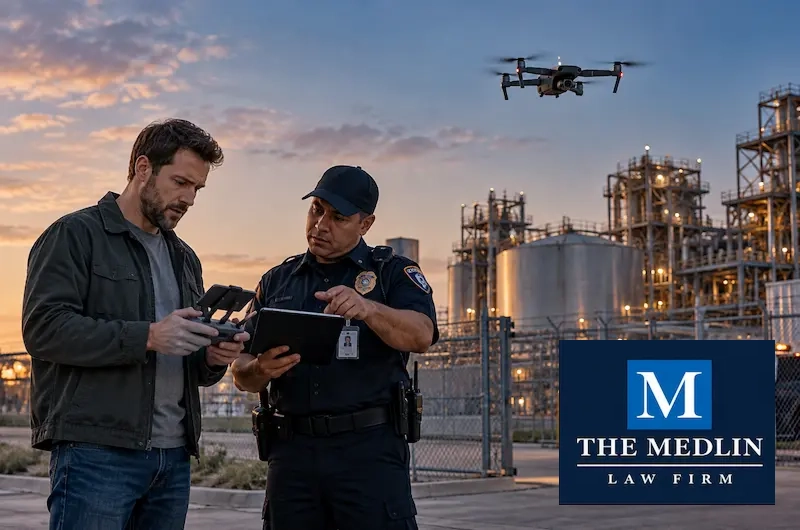
Drone use in Dallas is regulated by both state and federal laws. These laws address different concerns, so the rules that apply to a flight depend on where the drone was operated and what it was used for. Understanding these requirements is important because some violations can result in criminal charges, while others are handled through regulatory enforcement.
Texas Drone Laws On Surveillance & Flights Over Protected Sites
Chapter 423 of the Texas Government Code addresses drone activities involving surveillance and operations over certain protected locations. Several provisions establish criminal offenses, including:
These laws contain exceptions, and the prosecution must establish the elements of the particular offense. For example, a surveillance charge requires proof of the intent specified by law. And when allegations involve a protected facility, the exact flight location and the facility’s legal classification become important.
Federal Drone Flight Restrictions & Potential Criminal Charges
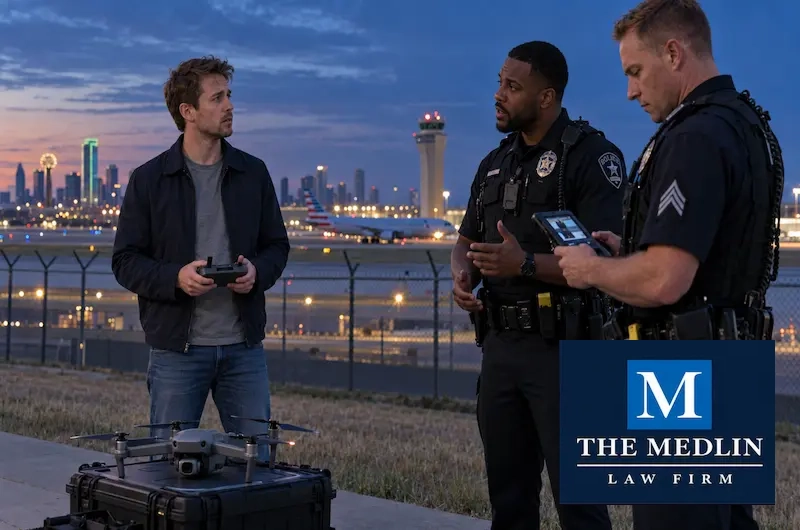
The Federal Aviation Administration (FAA) regulates drone operations throughout the United States. Most commercial flights are governed by 14 CFR Part 107, while recreational flights must meet separate requirements under federal law. Violations of FAA regulations may result in civil penalties, but certain conduct can also lead to federal criminal charges.
Unauthorized Drone Flights Near Dallas Airports & Runways
Drone operators generally need FAA authorization to fly in controlled airspace surrounding Dallas Love Field and Dallas/Fort Worth International Airport. Federal law also establishes runway exclusion zones at covered airports, where knowingly operating a drone without authorization can constitute a criminal offense under 18 U.S.C. § 39B. These restrictions help protect aircraft during takeoff and landing.
Drone Charges For Entering Restricted National Defense Airspace
Federal law restricts drone flights in certain airspace designated for national defense purposes. Knowingly or willfully violating these restrictions can result in criminal prosecution under 49 U.S.C. § 46307.
Federal Drone Charges For Interfering With Occupied Aircraft
Knowingly or recklessly operating a drone in a way that interferes with an occupied aircraft and creates an imminent safety hazard is a federal crime. For example, a drone approaching an aircraft closely enough to force its pilot to take evasive action may lead to criminal charges.
Federal Charges For Intentionally Damaging Aircraft With Drones
More serious federal charges may apply when someone intentionally uses a drone to damage or destroy an aircraft. Under 18 U.S.C. § 32, certain acts that damage aircraft or endanger their safe operation are criminal offenses. An accidental collision does not automatically establish an intentional aircraft damage offense.
Drone Charges For Interfering With Wildfire Suppression Operations
Federal law also prohibits knowingly or recklessly operating a drone in a manner that interferes with qualifying wildfire suppression efforts. This includes drone activity that disrupts firefighting aircraft or forces pilots to suspend operations because of safety concerns. Such conduct can result in criminal prosecution.
About The Medlin Law Firm
Penalties & Consequences Of Drone-Related Criminal Charges
The penalties for drone-related offenses depend on the law violated and the circumstances of the incident. Texas law generally imposes misdemeanor penalties for prohibited drone surveillance and certain flights near protected facilities. Federal offenses involving aircraft safety or restricted airspace can carry prison sentences.
| Offense | Potential Penalties |
|---|---|
| Unlawful Drone Surveillance (Tex. Gov’t Code § 423.003) | Class C misdemeanor, punishable by a fine of up to $500. |
| Possessing Images That The Person Unlawfully Captured Using A Drone (Tex. Gov’t Code § 423.004) | Class C misdemeanor, with a fine of up to $500. |
| Disclosing Or Distributing Images That The Person Unlawfully Captured Using A Drone (Tex. Gov’t Code § 423.004) | Class B misdemeanor, punishable by up to 180 days in jail and a fine of up to $2,000. |
| Prohibited Drone Operations Over Critical Infrastructure Facilities Or Sports Venues (Tex. Gov’t Code §§ 423.0045–423.0046) | Generally a Class B misdemeanor for a first offense, punishable by up to 180 days in jail and a fine of up to $2,000. A qualifying repeat offense may be a Class A misdemeanor, carrying up to one year in jail and a fine of up to $4,000. |
| Unauthorized Drone Operations Within Airport Runway Exclusion Zones (18 U.S.C. § 39B) | A federal fine, imprisonment for up to one year, or both. Certain offenses involving serious bodily injury or death can carry substantially higher penalties. |
| Violating Certain National Defense Airspace Restrictions (49 U.S.C. § 46307) | A federal fine, imprisonment for up to one year, or both. A second or subsequent conviction can carry up to five years in prison. |
| Interfering With Occupied Aircraft (18 U.S.C. § 39B) | A federal fine, imprisonment for up to one year, or both. Certain offenses involving serious bodily injury or death can carry higher penalties. |
| Certain Federal Aircraft Damage Or Destruction Offenses (18 U.S.C. § 32) | Imprisonment of up to 20 years under applicable provisions of federal law. |
| Interfering With Wildfire Suppression Operations (18 U.S.C. § 40A) | A federal fine, imprisonment for up to two years, or both. |
These penalties represent possible statutory consequences. The actual punishment depends on the circumstances of each case and the applicable law.
FAA Drone Enforcement, Civil Fines & Pilot Certification
A drone incident may also lead to FAA enforcement, even when criminal charges are not filed. The agency can impose civil fines for regulatory violations and may suspend or revoke a remote pilot certificate. These actions can affect someone’s ability to continue operating drones professionally.
What To Expect After Facing A Drone-Related Charge
The criminal process depends on whether the alleged violation falls under Texas or federal law. State cases generally proceed through local courts in Dallas, while federal charges may be handled in the U.S. District Court for the Northern District of Texas.
- 1Investigation and Filing of Charges: Law enforcement may review flight records or interview witnesses to determine whether a crime occurred. Prosecutors then decide whether to file charges.
- 2Arrest or Initial Court Appearance: Depending on the offense, you may receive a citation or summons, or be arrested. The court may address the charges and establish conditions for release.
- 3Discovery and Case Preparation: Your lawyer examines the prosecution’s evidence and prepares a defense. Preserve any drone recordings or flight logs that may be relevant to the allegations.
- 4Negotiations and Possible Resolution: Some cases may be resolved through negotiations, including reduced charges or other available agreements. Your Dallas drone charge lawyer can explain the consequences of any proposed resolution.
- 5Trial and Verdict: If the case proceeds to trial, prosecutors must prove the charge beyond a reasonable doubt. The defense can challenge the evidence before the court reaches a verdict.
If investigators contact you about a drone incident, consider speaking with a criminal defense law firm handling drone charges in Dallas, TX, before answering questions about the alleged violation.
The Medlin Law Firm — Dallas, Texas
Get Legal Guidance From A Dallas Drone Charge Attorney Today
Being accused of a drone-related offense does not mean a conviction is inevitable. The prosecution still has to establish that your conduct violated the law, and you have the right to contest the allegations. Getting legal representation early allows you to make informed decisions about your defense while avoiding unnecessary risks during the criminal process.
At The Medlin Law Firm, we take a careful approach to defending people accused of drone-related offenses in Dallas. We work with you to understand the charges, address concerns about the proceedings, and pursue a resolution that protects your interests. If you are facing an investigation or criminal prosecution, contact our team to discuss your situation with a drone charge attorney in Dallas, TX.


