


How Rising BAC Could Be Your DWI Defense In Dallas
TL;DR:
The rising BAC defense argues that your blood alcohol level was still climbing when you were stopped and had not yet reached 0.08 while you were driving. Since breath and blood tests are typically administered 45 to 90 minutes after the stop, the recorded result may reflect a BAC you reached after you parked, not while you were on the road. This defense is scientifically grounded but depends entirely on the timing facts, what you consumed, and when.
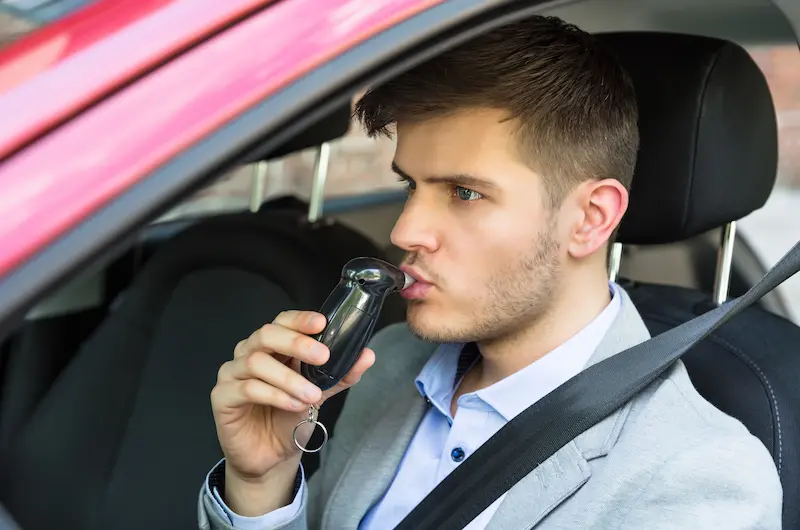
What Is The Rising BAC Defense & How Does It Work In Texas?
Under the Texas DWI intoxication standard in Tex. Penal Code § 49.01, a person is intoxicated if they had a BAC of 0.08 or more at the time they were operating a motor vehicle. The key phrase is “at the time.” A test administered at the station 60 minutes after the stop reflects your BAC at the station, not your BAC while you were driving. The rising BAC defense argues that alcohol was still being absorbed into your bloodstream when the stop occurred, meaning the recorded result overstates your actual level on the road. It is not a claim of sobriety, it is a challenge to whether the number the State is using accurately represents your condition at the moment you were behind the wheel.
The Alcohol Absorption Curve & Why Timing Changes Everything
After you drink, alcohol enters the stomach and small intestine before passing into the bloodstream. Absorption is not immediate. Depending on how much you consumed, the timing of your last drink, what you ate, your body weight, and your gender, the absorption phase can last 30 to 90 minutes or longer. During that window, your BAC is still climbing. The peak may not arrive until well after you stopped driving. Food slows absorption significantly, a meal consumed before or during drinking can extend the climbing phase and delay the peak substantially. Someone who took their last drink 30 minutes before driving and was tested 60 minutes after the stop could have a recorded BAC that meaningfully exceeds what it was while they were on the road.
Retrograde Extrapolation: The Science Defense Attorneys Use In Court
Retrograde extrapolation is the process of working backward from a known BAC measurement at a specific time to estimate what the BAC was at an earlier point. Forensic toxicologists use established absorption and elimination rates to perform this calculation. According to alcohol absorption and retrograde extrapolation research, the standard elimination rate applied in these calculations is approximately 0.015 to 0.020 grams per deciliter per hour, but individual variation is substantial. The margin of error in retrograde extrapolation is significant enough that when a recorded result is near 0.08, the calculation can produce an estimated driving-time BAC that falls below the legal limit or produces a range that includes values below it, which is sufficient to raise reasonable doubt.
What To Document After Your Dallas DWI Arrest Right Away
The rising BAC defense depends on timing records that cannot be reconstructed after the fact. Document the following as soon as possible after your arrest:
- The exact time of your last drink and what you consumed
- Whether you ate food, approximately how much, and when
- The time the stop began and the time shown on your DIC-25 form
- Any receipts, bar tabs, or restaurant records from that evening
The arrest-side records come through discovery: time of stop, time of test, device used, and the station testing log. Your personal timeline has to come from you, and the window for accurate recall closes fast.
When Rising BAC Works & When The Gap Is Too Narrow To Matter
The strongest cases involve a result near 0.08, a gap of 45 minutes or more between the stop and the test, and concrete evidence of when consumption occurred. The longer the gap and the closer the result to the legal limit, the more the extrapolation math can work in your favor. A result of 0.09 administered 75 minutes after the stop, with a documented last drink 20 minutes before driving, presents real room to argue. When the BAC was well above 0.12, the time gap was brief, or there is no usable timeline to work with, the margin will not close. This defense requires specific facts and an expert who can quantify the curve, when the challenge is to the machine rather than the timing, that is a separate argument covered by breathalyzer challenges in Dallas.
How Defense Attorneys Present Retrograde Extrapolation In Court
In pretrial work, the defense requests the exact time of the stop, the time of the test, and all station logs. A forensic toxicologist reviews those records and performs an independent extrapolation. In cross-examination, the timing gap is used to establish that the test result does not necessarily reflect the defendant’s BAC while driving. At trial, the toxicologist testifies to the absorption rate, the individual variables in that specific case, and the range of possible BAC values at the time of the stop. When built alongside other evidence challenges as part of a complete DWI defense strategy in Dallas, the State’s number becomes an estimate, one the defense has measured, quantified, and placed in genuine scientific doubt.
Evaluate Your Rising BAC Defense Before The Case Moves Forward
A rising BAC defense is not available in every case, but in the right factual scenario it can change what the State’s number actually means. Schedule a confidential case evaluation with The Medlin Law Firm. We will review the timing records, the test result, and the absorption facts to tell you honestly whether this defense applies to your case.
Related Posts


Request a Free Case Evaluation
CATEGORIES