


Field Sobriety Test Myths Vs. Reality In Texas
TL;DR:
Field sobriety tests in Texas are not pass/fail science. They are officer observations interpreted against NHTSA guidelines originally validated under controlled laboratory conditions that rarely match a real roadside stop. A failing performance does not prove intoxication. Medical conditions, anxiety, surface conditions, footwear, and age all affect results independently of alcohol. You are not legally required to perform these tests in Texas. How they are administered, and what the camera captured versus what the police report says, often tells a different story.
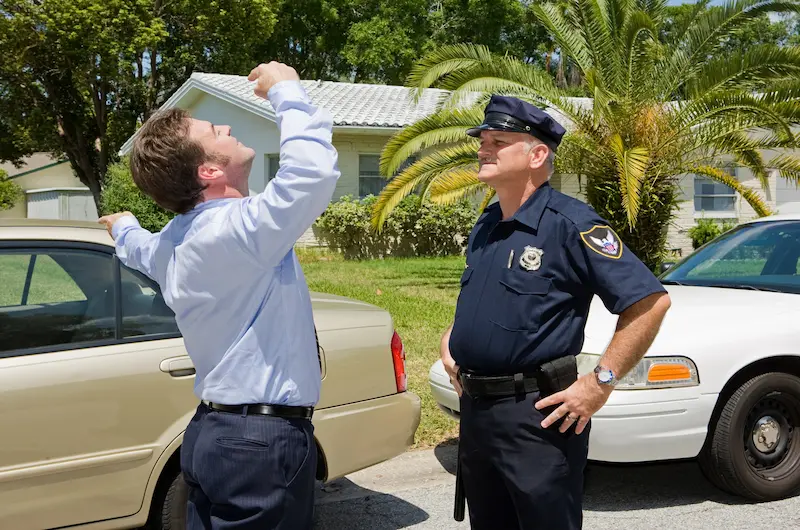
The Three Standardized Tests Texas Officers Are Supposed To Use
Under the NHTSA standardized field sobriety testing guidelines, three tests form the official battery: the Horizontal Gaze Nystagmus test, the Walk-and-Turn test, and the One-Leg Stand test. The HGN test involves tracking a moving object with your eyes while the officer watches for involuntary jerking at specific angles, which NHTSA associates with central nervous system impairment. The Walk-and-Turn requires nine heel-to-toe steps on a line, a pivot turn, and nine steps back while counting aloud and maintaining balance. The One-Leg Stand requires holding one foot six inches off the ground for 30 seconds. Officers score each test by counting observable “clues”, specific deviations from the instructions, and use the clue count to determine whether to arrest. Nothing about that counting process is automatic or objective.
What The Science Actually Says About FST Accuracy In Texas
The NHTSA studies that originally validated these tests were conducted in controlled settings, not on roadside shoulders at 2 a.m. in Dallas traffic. The HGN test scientific validity, the most widely used of the three, correctly identified impairment approximately 77 percent of the time under those ideal conditions. That means it produced an incorrect result roughly one in four times even in a controlled environment. Walk-and-Turn and One-Leg Stand have lower reported accuracy in independent research. The original validation studies were also conducted at a 0.10 BAC threshold, not the current Texas legal limit of 0.08. A test designed for one standard and applied at a lower one is not neutral evidence. It is a data point that deserves scrutiny, and challenging it is a core part of any complete DWI defense strategy in Dallas.
Conditions That Can Make You Fail With Zero Alcohol In Your System
Several documented physical and environmental factors produce FST results that look like impairment without any alcohol involved:
- Inner ear disorders, labyrinthitis, and vertigo, which directly affect balance and eye-tracking
- ADHD, neurological conditions, and prior head injuries, which impair the divided-attention tasks required by Walk-and-Turn
- Anxiety from the traffic stop itself, which produces an adrenaline response that affects fine motor coordination
- Age, body weight, and back or leg injuries that limit balance and the ability to hold physical positions
- Inadequate footwear or an uneven testing surface that makes heel-to-toe compliance nearly impossible
- Poor lighting and proximity to passing traffic throughout the test
Officers are trained to ask about these conditions before testing begins. Whether they did, and whether that inquiry was documented, is something the arrest report and video both need to answer.
Are Field Sobriety Tests Mandatory In Texas? The Real Answer
Texas law does not require you to perform field sobriety tests. They are not covered by the implied consent statute under Tex. Transp. Code § 724.011, which applies to breath and blood testing. You can decline without an automatic license suspension or criminal penalty tied to the refusal alone.
What refusal does not prevent: the officer can still arrest you based on other observations already made before the tests were offered, your driving, your speech, your appearance, or the odor of alcohol. Declining removes one category of evidence from the record. Whether that is the better outcome depends on what the officer already observed and what was already captured on camera before you stepped out of the vehicle.
How Bodycam Footage Exposes What The Police Report Doesn’t Say
Police reports describing FST performance reflect what the officer concluded, not always what the camera captured. Officers may note “unsteady balance” on footage that shows a steady subject, record clues the video does not support, or administer tests on surfaces the video clearly shows were uneven. The full standardized instructions required under NHTSA protocol may never have been given. The arrest report and the visual record are often not the same document, and the difference between them is where the defense work starts.
What A Defense Attorney Does With Field Sobriety Test Video
A defense attorney requests all available dashcam, bodycam, and nearby surveillance footage, then compares it directly against the officer’s recorded clue count and written narrative. Discrepancies between what the officer described and what the video shows go to the officer’s credibility at trial. If the arrest also involved a breath test, a challenge to the breathalyzer evidence in Dallas can run alongside the FST challenge, both raise the same question about whether the State’s proof of impairment is actually reliable enough to support a conviction.
Challenge Your Field Sobriety Test Results Before The Case Closes
Field sobriety test evidence is only as strong as the officer’s administration, the conditions at the scene, and what the camera actually recorded. Schedule a confidential case evaluation with The Medlin Law Firm. We will review the arrest report, the video, and the documented conditions of your stop to build an honest picture of what that test result is actually worth.
Related Posts


Request a Free Case Evaluation
CATEGORIES