
Dallas Probation Violation Lawyer: Revocation & Modifications
Key Points:
A Dallas probation violation lawyer can help when the state claims you broke probation terms and files a motion to revoke probation or a motion to adjudicate. Violations are often technical (missed reporting, failed drug test, unpaid fees, travel without approval) or substantive (new criminal charges), and both can lead to a revocation hearing and possible jail time. Texas courts may have options besides revocation, including probation modifications like added reporting, treatment, community service, or adjusted payment plans under Texas community supervision rules.
If you were accused of violating probation in Dallas, the situation can move fast, sometimes from a missed check-in to a warrant and a motion to revoke probation in a matter of days. A nationwide study by The Council of State Governments shows nearly 200,000 people were admitted to prison in 2023 for probation or parole violations. Also, over 110,000 of those admissions were for technical violations like missed appointments, failed drug tests, or skipped treatment, not new crimes.
At The Medlin Law Firm, our Dallas probation violation lawyer helps people facing violation allegations understand what’s happening. We aim to protect their rights and push for the strongest resolution available under the facts.
What Is Probation In Dallas?
Probation is a court-ordered plan that lets you stay in the community instead of serving your full sentence in jail or prison. In Texas, probation is often called community supervision, and it comes with strict terms and conditions of probation that you must follow. If you violate those probation terms, the court can schedule a hearing and decide whether to modify or revoke your probation.
Probation: Community Supervision
In Dallas, probation usually means you have a set probation period where you must follow rules ordered by the judge. Texas law defines community supervision as the court placing a person under a program of rules and sanctions for a specific time. This is due to the court delaying a final finding of guilt or because the court probated (suspended) a jail/prison sentence. (Tex. Code Crim. Proc. ch. 42A).
Most people on probation must:
- Report to a probation officer
- Pay fees, fines, or restitution (if ordered)
- Avoid new arrests or criminal conduct
- Complete community service or treatment programs (if required)
- Follow travel, curfew, or location limits (when ordered)
In plain terms: you’re not “done” with your case. You’re serving your sentence in the community, and the court expects compliance.

Deferred Adjudication vs. Regular Probation
In Dallas, you may hear probation described in two main ways:
Deferred adjudication (deferred): The judge does not enter a final conviction at the start. If you complete the probation terms, you may avoid a conviction on your record for that case (though the arrest and court history may still exist). Deferred adjudication is a form of community supervision under Texas law. (Tex. Code Crim. Proc. ch. 42A).
Regular/straight probation: The judge finds you guilty (a conviction happens), but the judge suspends the jail/prison sentence and places you on probation instead. (Tex. Code Crim. Proc. ch. 42A).
Both types can lead to a probation violation hearing if the state claims you violated the terms. The procedure and risks can differ depending on whether you’re on deferred or straight probation, which is why it matters to get clear on which type you have.
Common Terms Of Your Probation & How Violations Happen
Many probation violation cases start with everyday issues that snowball. Here are common conditions in Dallas and how a technical violation can happen:
| Common Probation Condition | How A Violation May Occur |
|---|---|
| Report as directed | Missing or being late to a check-in with your probation officer |
| Drug/alcohol testing | A failed test, missed test, or diluted sample |
| Fees, fines, restitution | Falling behind without an approved payment plan |
| Travel restrictions | Leaving Dallas or traveling without prior approval from your probation officer |
| Programs (classes/treatment) | Not enrolling, missing sessions, or not finishing on time |
A violation does not always mean someone committed a new crime. Sometimes it’s paperwork, scheduling, money, transportation, or misunderstanding instructions. But even a small issue can be treated as a probation violation, and it can bring serious consequences if it isn’t handled the right way.
Types Of Probation Violations In Texas
Probation violations in Dallas usually fall into a few clear buckets. The type matters because it shapes how the prosecutor argues the case and what the judge may do next. Some violations are technical, meaning you broke a rule but did not pick up a new criminal charge. Others are substantive, meaning the state says you committed a new offense while you were on community supervision under Texas law.
Technical Violations: Rule-Breaking Without A New Charge
A technical violation is when you allegedly violated the terms and conditions of probation, even if you weren’t arrested for a new crime. These are common, and they often come from everyday life problems, work schedules, transportation, money, stress, or confusion about what your probation officer requires.
Examples of technical violations may include:
- Missing a check-in or being late for a meeting with your probation officer.
- Failing to complete community service hours by the deadline.
- Falling behind on fees, fines, or restitution (if ordered).
- Missing or failing a drug/alcohol test (or providing an invalid sample).
- Leaving Dallas or traveling without approval from your probation officer.
- Not finishing classes, counseling, or treatment that the court ordered.
Even though these are technical, the consequences can still be serious, including jail time, especially if the court believes the issue is repeated or ignored.
Substantive Violations: New Criminal Charges
A substantive violation usually means the state claims you committed a new crime while you were on probation. This can include arrests for misdemeanors or felonies, anything from theft or assault allegations to drug charges.
Substantive violations often raise the stakes because:
- The probation case and the new criminal case can move at the same time.
- The prosecutor may argue that you are a higher risk to reoffend.
- The judge may be less willing to give “another chance,” depending on the facts and history.
Important note: an arrest alone does not automatically prove you violated probation. The state still has to present enough evidence at a hearing to support the alleged violation, and your defense strategy matters.
One Allegation vs. Multiple Violations
Many probation violation cases involve more than one alleged issue at the same time. For example, a person might be accused of missing a report date, failing a test, and falling behind on payments, all in one filing. That’s why it helps to identify every alleged violation and sort them by category before walking into court.
Here’s a quick way to think about the “nature of the violation”:
| Type Of Probation Violation | What It Usually Means | Common Examples |
|---|---|---|
| Technical violation | Rule not followed | Missed report, failed test, unpaid fees, travel without permission |
| Substantive violation | New law violation | New criminal charges, arrest for a new offense |
Why The Type Of Violation Changes The Risk
Under Texas law, a judge can respond to an alleged probation violation by continuing probation, modifying conditions, extending the term, or revoking probation after a hearing process. (Tex. Code Crim. Proc. arts. 42A.751–.755).
In real life, judges often look at patterns, whether this is a first issue or the latest in a series, and whether you took the situation seriously once you learned about it. That’s where a Dallas probation violation lawyer can help you present facts, records, and solutions that fit your situation.
How We Defend Against Alleged Probation Violations
If you’re facing a Dallas probation violation, the goal is to take control of the facts before the case controls you. Some violations are misunderstandings, paperwork problems, or life issues that can be documented and explained. Others involve new criminal charges and require a defense plan that protects you in both cases at the same time.

Defense Strategies When There Are New Criminal Charges
A substantive violation usually means the state alleges you committed a new offense. That can trigger a probation violation hearing while your new case is still pending. The risk is that something you say or admit in the probation case can hurt you later in the new criminal case.
A strong approach often includes:
- Treating the probation case and the new case as connected.
- Avoiding statements that lock you into a story too early.
- Challenging the reliability of the state’s evidence (witness problems, weak identification, lack of proof, illegal stop/search issues in the new case).
Important: a new arrest is not the same thing as proof you violated probation. The court will still review evidence and credibility at the hearing, and your defense strategy can shape what the judge decides.
Negotiating For A Probation Modification Instead Of Revocation
Not every case is a win or lose. Sometimes, the best outcome is keeping you out of jail by pushing for a probation modification instead of revocation. Modifications may include added classes, counseling, more reporting, community service, or adjusted payment plans. It all depends on the underlying case and what the judge will accept under Texas community supervision rules.
Here are examples of modifications that may be requested in some cases:
- More frequent reporting to a probation officer for a set period.
- Treatment program enrollment (substance use, mental health, and anger management).
- Community service makeup plan.
- Payment schedule for fees and restitution.
- Curfew or travel restrictions (if the court wants closer supervision).
What Helps Most At A Revocation Hearing
Judges often want to see two things: (1) the truth, backed by proof, and (2) a realistic plan that prevents repeat issues. This is where preparation can make a difference.
Here’s a simple preparation list many people overlook:
| What To Prepare | Why It Matters |
|---|---|
| Copy of your probation order | Shows the exact terms of your probation |
| List of alleged violations | Keeps the defense focused on what’s actually claimed |
| Proof you complied (or tried) | Helps fight technical violations and show good faith |
| A corrective plan | Supports an argument for modification instead of revocation |
| Character/support letters (when appropriate) | Helps show stability and responsibility (used carefully) |
How A Dallas Probation Violation Lawyer Can Help
A Dallas probation violation attorney can help you understand what you’re accused of, gather the right documents, and present a defense that fits the reality of your case. The Medlin Law Firm focuses on practical defense work, reviewing the allegation, challenging weak claims, and pushing for outcomes that reduce or avoid jail time when possible. The earlier our Dallas probation violation law firm can step in, the more room we often have to build a cleaner record and a stronger plan.
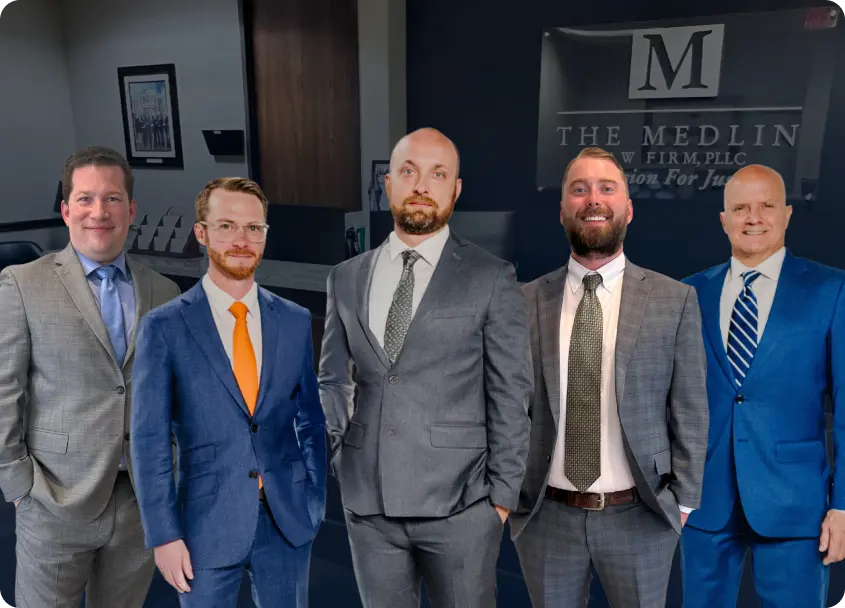
Talk To The Medlin Law Firm About A Case Evaluation
When probation is on the line, waiting can make things worse. A warrant, a court date, or a revocation request can move faster than most people expect. A case evaluation gives you a clear plan based on the facts, the alleged violation, and the Dallas court process.
What To Bring To Your Case Evaluation
If you can, gather:
- Your probation paperwork (terms and conditions of probation).
- Any violation documents (motion to revoke / motion to adjudicate).
- Notes or messages about meetings with your probation officer.
- Test results, class records, or treatment documents.
- Proof of payments (or proof of income/hardship if money is the issue).
- Any paperwork related to new criminal charges (if applicable).
How The Medlin Law Firm Approaches Probation Violation Cases
The Medlin Law Firm focuses on the details that decide outcomes, what the state can actually prove, what records support you, and what solutions the judge may consider. We look at whether the allegation is a technical violation or a substantive violation, and we build a plan that fits your specific probation terms. If revocation is being pushed, we prepare as if the hearing is the main event, because for many people, it is.
If you’re facing a Dallas probation violation allegation, contact The Medlin Law Firm to schedule a case evaluation.
THE MEDLIN LAW FIRM
Contact Us Today
Dallas Office
The Medlin Law Firm
2550 Pacific Ave #866
Dallas, TX 75226
(214) 888-4810
Fort Worth Office
The Medlin Law Firm
1300 S University Dr #318
Fort Worth, TX 76107
(682) 204-4066

Request a Free Case Evaluation