

Fort Worth Drone Charges Lawyer
Summary:
Drone-related charges in Fort Worth can arise from various activities, including unlawful surveillance, possessing or sharing illegally captured images, or flying over protected facilities and sports venues. Texas law sets different penalties for these offenses, ranging from fines to jail time. Federal drone regulations may also lead to FAA fines, loss of pilot certification, or criminal prosecution for serious violations. If you’re accused of illegal drone use, preserve your flight records, be cautious when speaking with investigators, and seek legal advice to understand the allegations and available defenses.
You can legally operate a drone in Fort Worth, TX, but certain restrictions protect public safety and individual privacy. A flight may lead to a criminal investigation if authorities suspect unlawful surveillance or operations in prohibited areas. Texas law addresses specific drone-related offenses, while federal aviation regulations establish additional rules for operating unmanned aircraft.
If you are accused of illegal drone use, the central question is whether your actions violated a specific law, and answering that requires examining what happened during the flight. A drone charge attorney in Fort Worth can evaluate the allegations and help protect your rights. At The Medlin Law Firm, our team can provide criminal defense representation to help you understand the charges and determine how to respond.
When Can Drone Use Lead To Criminal Charges In Fort Worth, TX?
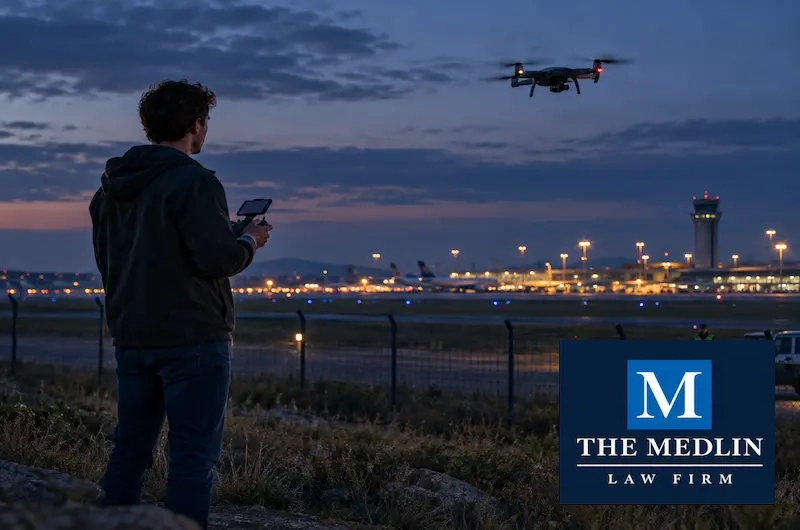
A drone flight can become a criminal matter when its use raises concerns about privacy or public safety. Authorities may investigate after receiving a complaint about suspicious activity, but a complaint alone does not establish that an offense occurred. What matters is whether the operator’s conduct falls within a specific criminal prohibition.
Situations that may lead to criminal allegations include:
These situations do not necessarily establish criminal liability. A flight that appears suspicious to an observer may still be lawful, and some operations are expressly permitted under Texas law. The specific statutes governing these activities determine when an investigation can support criminal charges.
Texas Laws That Can Apply To Drone-Related Charges
Texas Government Code Chapter 423 establishes several criminal offenses involving unmanned aircraft. These provisions address how drones are used and impose restrictions on operations in certain locations.
When Is Drone Surveillance Illegal Under Texas Law § 423.003?
Section 423.003 makes it a Class C misdemeanor to use a drone to capture an image of an individual or privately owned real property with the intent to conduct surveillance. The prosecution must establish that the image was captured for that purpose. The statute also recognizes lawful uses of drones under Section 423.002, which may affect whether an offense occurred.
Can You Keep Or Share Illegally Captured Drone Images?
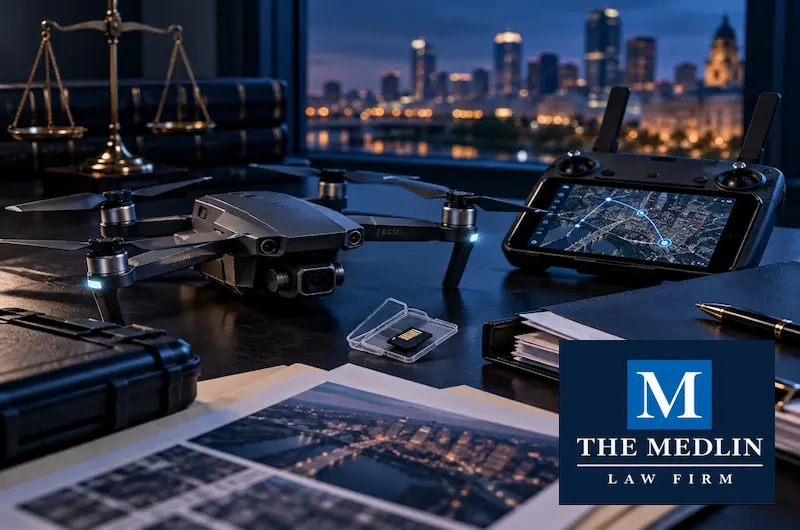
Under Section 423.004, a person who captures an image through unlawful drone surveillance may face additional charges for possessing or using that image. Possession is a Class C misdemeanor, while disclosing, displaying, distributing, or otherwise using the image is a Class B misdemeanor. Each image involved can constitute a separate offense.
Is It Illegal to Fly a Drone Over Critical Infrastructure?
Section 423.0045 prohibits intentionally or knowingly operating a drone over a critical infrastructure facility at or below 400 feet above ground level. It also restricts allowing a drone to contact the facility or come close enough to interfere with its operations or cause a disturbance.
The restrictions apply to qualifying facilities, including power plants, petroleum refineries, and certain chemical manufacturing facilities, and the statute provides exceptions for certain authorized operations. A first offense is generally a Class B misdemeanor, while a subsequent conviction under this section may result in a Class A misdemeanor.
Is It Illegal To Fly A Drone Over Sports Venues?
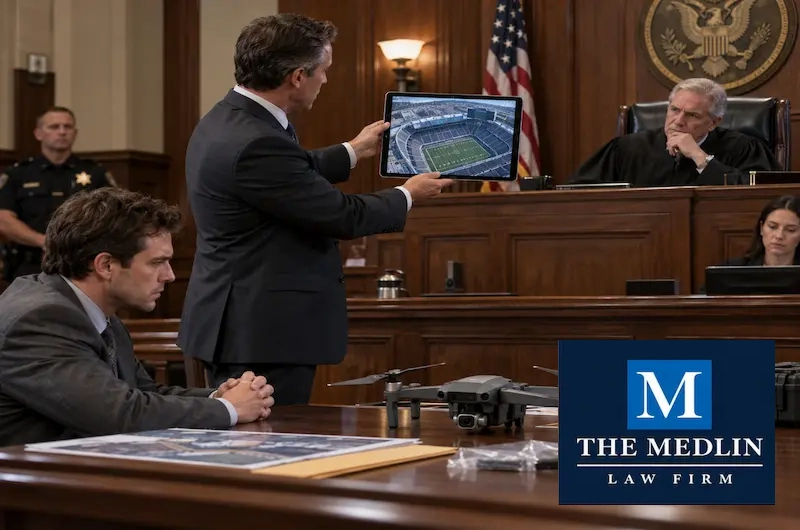
Section 423.0046 addresses drone flights over qualifying sports venues. It generally prohibits intentionally or knowingly operating an unmanned aircraft at or below 400 feet above these locations, subject to statutory exceptions. A violation is generally a Class B misdemeanor.
About The Medlin Law Firm
On This Page
- When Can Drone Use Lead To Criminal Charges In Fort Worth, TX?
- Texas Laws That Can Apply To Drone-Related Charges
- Federal Drone Rules That May Affect A Criminal Case
- What Are The Penalties & Consequences Of Drone-Related Offenses?
- What To Do After Being Accused Of An Illegal Drone Operation
- Let A Drone Charge Attorney In Fort Worth Protect Your Rights
Federal Drone Rules That May Affect A Criminal Case
The Federal Aviation Administration (FAA) regulates drone operations in the U.S. Its rules establish requirements for operating drones safely and obtaining permission to fly in certain airspace. Violations can lead to federal enforcement, even when no state criminal charges are filed.
Several federal requirements may become relevant during a drone investigation:
| Federal Rule | What Drone Operators Need To Know |
|---|---|
| Drone registration | Most drones weighing 0.55 pounds or more must be registered with the FAA. Drones operated under Part 107 generally require registration regardless of weight. |
| Controlled airspace | Operators generally need FAA authorization before flying in controlled airspace around airports. |
| Flight altitude | Under Part 107, drones generally cannot fly higher than 400 feet above ground level, although exceptions apply when operating near qualifying structures. |
| Remote pilot certification | Part 107 operations generally require a certificated remote pilot in command who meets FAA requirements. |
| Visual line of sight | Operators generally must keep the drone within visual line of sight throughout the flight unless an applicable exception or waiver permits otherwise. |
| Restricted airspace | Certain areas are subject to flight prohibitions or additional restrictions. Operators must comply with applicable airspace rules and authorizations. |
The FAA may respond to violations with civil fines or action against a remote pilot certificate, including suspension or revocation. More serious conduct may also trigger federal criminal investigations, particularly when drone operations endanger aircraft or interfere with aviation safety.
What Are The Penalties & Consequences Of Drone-Related Offenses?
A drone-related investigation can result in more than one type of legal penalty. State criminal charges may carry fines or jail time, while federal violations can expose an operator to separate criminal punishment or FAA enforcement actions.
Penalties For Drone Offenses Under Texas Law
Under Texas Government Code Chapter 423, the potential punishment increases with the seriousness of the offense.
| Offense | Classification | Maximum Punishment |
|---|---|---|
| Unlawful drone surveillance | Class C misdemeanor | $500 fine |
| Possessing an image captured through unlawful surveillance | Class C misdemeanor | $500 fine |
| Disclosing or using an unlawfully captured image | Class B misdemeanor | 180 days in jail and $2,000 fine |
| Prohibited flights over critical infrastructure or qualifying sports venues | Class B misdemeanor | 180 days in jail and $2,000 fine |
| Repeat violations involving these protected locations | Class A misdemeanor | 1 year in jail and $4,000 fine |
Each image possessed or used in violation of Section 423.004 can count as a separate offense. The repeat-offense penalties apply when the accused has a qualifying prior conviction under the relevant drone statutes.
Federal Criminal Penalties For Illegal Drone Operations
Certain drone-related activities may result in federal criminal charges. Examples of offenses and their potential maximum prison sentences include:
Federal criminal fines may also apply. Some offenses carry enhanced penalties when serious injury or death results.
Can Drone Violations Lead to FAA Fines?
Federal aviation enforcement can also affect operators who are never criminally convicted. The FAA may impose civil fines of up to $75,000 per violation for unsafe or unauthorized drone operations. It can also suspend or revoke a remote pilot certificate, potentially preventing someone from continuing work that requires FAA certification.
What To Do After Being Accused Of An Illegal Drone Operation
If someone reports your drone activity to law enforcement, you may be contacted for questioning or asked to provide flight records. How you respond can affect the investigation, especially when electronic evidence is involved.
- 1Preserve your drone records – Keep flight logs, recorded footage, controller data, and related files in their original condition. Avoid deleting recordings or resetting equipment, even if you believe the information is irrelevant.
- 2Avoid discussing the incident publicly – Social media posts or statements about the flight may be used during an investigation. Be cautious about explaining what happened before understanding the allegations.
- 3Understand requests for access to your devices – Officers may ask to examine your drone or electronic records. You can ask whether a search is voluntary or authorized by a warrant and seek legal advice before consenting. Do not physically interfere with a lawful search.
- 4Review any official notices – A police summons, court document, or FAA enforcement notice may contain deadlines requiring prompt attention.
- 5Contact a criminal defense lawyer – A drone charge lawyer in Fort Worth can identify the alleged violations, advise you about questioning, and help preserve evidence that may support your defense.
If you have already spoken with investigators, tell your lawyer what was discussed. That information can help your defense attorney assess the investigation and determine what steps should follow.
The Medlin Law Firm — Fort Worth, Texas
Let A Drone Charge Attorney In Fort Worth Protect Your Rights
A drone appearing in a restricted area or capturing footage of private property does not automatically mean its operator committed a crime. As a defense law firm handling drone charges in Fort Worth, The Medlin Law Firm carefully examines the circumstances surrounding each accusation to determine whether the evidence supports a criminal offense. Our attorneys assess the applicable laws while considering how federal aviation regulations may affect the allegations.
Your freedom and reputation deserve a defense that takes these distinctions seriously. Our team is committed to protecting your rights and ensuring that the allegations receive a thorough legal examination. If you are under investigation or have been charged with illegal drone use, contact us at The Medlin Law Firm to discuss your situation and find out how our team can help.


